Nigel Farage rules out deal with Restore Britain unless it disavows controversial backers
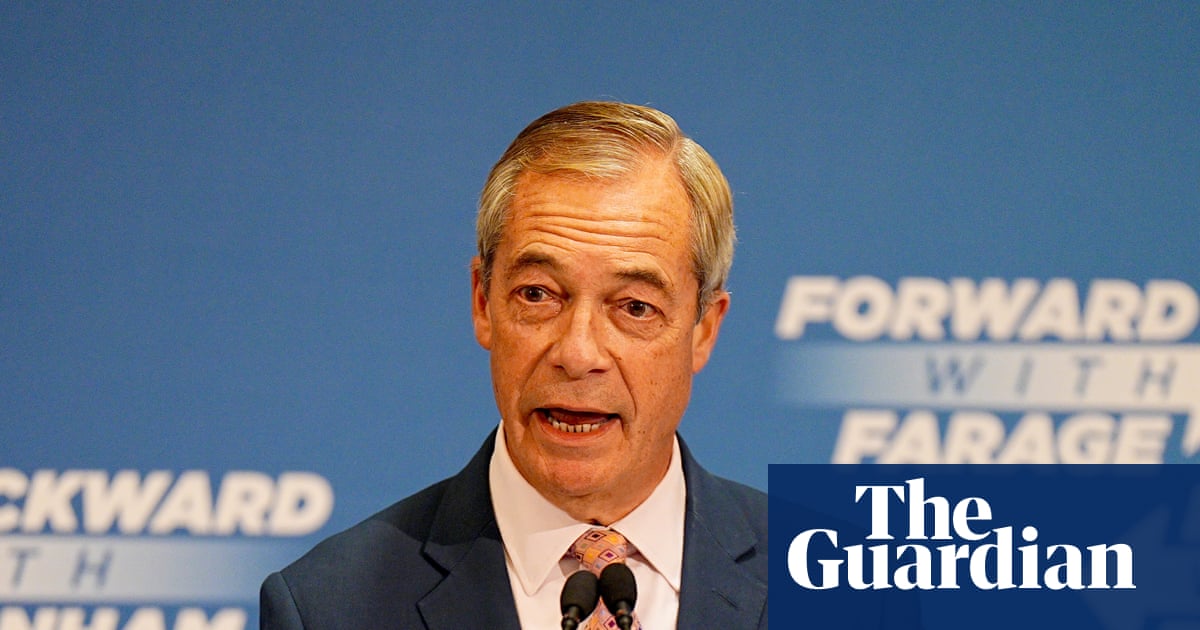
Nigel Farage has said he might have a “civil chat” with Rupert Lowe but ruled out a deal with Restore Britain while some of its supporters promote antisemitism and think race should be linked to nationality.
At a press conference in London, the Reform UK leader was questioned about the idea of a pact given that Restore is a rival on the hard right and has been eating into his party’s share of the vote.
Some senior figures in Reform have discussed the possibility of a deal with Restore or allowing Lowe back into the fold if he were to disavow the ethnonationalist ideas of some of his backers. Others have floated the idea of a “non-aggression pact” to avoid splitting the right further.
Asked whether he would kiss and make up with Lowe, who left Reform and founded his own party after bitter rows with senior figures, Farage said: “I don’t kiss chaps all that much, to be honest with you. I mean, I might have a civil chat.
“But … sit down with Calvin Robinson, who wants to drive the Jews out of America? I don’t think so. Shall I sit down with Steve Laws, who wants a deportation policy that would be ambitious in 1938 Germany? I mean, am I going to sit down with those people and do a deal? Not a chance, and I think really that Rupert Lowe should be disavowing these people.”
He added: “Have a look at some of those people who have embedded themselves in Restore Britain. I’m not going to say anything disobliging about Mr Lowe; we might have had our disagreements over the years. But you can’t sit down and do an electoral pact with an organisation that has people like that relatively senior within it. I’d be very surprised if anybody sitting on the front row [Reform colleagues] would want me to go down that path.”
On Monday, Farage had said: “I’ve said before that if Lowe were to get rid of those people, that would be a different kettle of fish.”
Restore has been criticised over its decision to allow membership of the party to be held by Robinson, a hard-right cleric and commentator who has called on a podcast for Jews to be driven out of America. The party has also faced criticism over its association with Laws, a rightwing figure who is a proponent of “remigration” of immigrants and their descendants.
Earlier in the press conference, Farage made clear he had no time for “ethnonationalist” views – the idea that nationality should be linked to race and ancestral bloodlines.
He rejected the arguments that the Reform MP Suella Braverman has made about being British-Asian rather than English, saying it might have a place in an Oxford Union debate but adding: “I view it as an unwelcome debate and I don’t want to hear anything about it again. Is that clear?”
On ethnonationalism in general, he said: “I’m very worried about it. And I think you can see with the online right, both in this country and America, some pretty extraordinary things being said that would have been unthinkable even a handful of years ago.
“You know, there was the Calvin Robinson case not long ago – presenting a TV show in Britain, spoke at a Restore dinner two weeks ago – saying things in America for which I have no doubt he’ll be kicked out of the country and never allowed back. So, yes, there is a rise.”
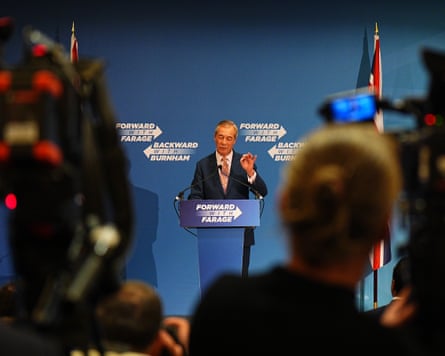
On Brexit, Farage accused Andy Burnham of “looking backwards” and having a “romantic” view of the EU that was out of date. He said the Conservatives were remain supporters “masquerading” as Brexiters, and he sought to cast Reform as the only party that could be trusted on the issue of staying out of the EU.
Asked whether he would work with the Tories on a campaign to stay out of the EU, he said: “I do not trust the Conservative party on this issue. I trusted them back in 2019. I felt it was the right thing to do. I will never trust them again. And there’s no evidence to suggest that many of millions of others should do so.”
Материал изданияThe Guardian World
Читать в оригинале