Days out from the Victorian election, nine datacentre projects await approval. What will their fate be?
Days out from the Victorian state election, the fate of nine datacentre projects remains uncertain, with some companies confident they will be able to get their projects across the line after Saturday.
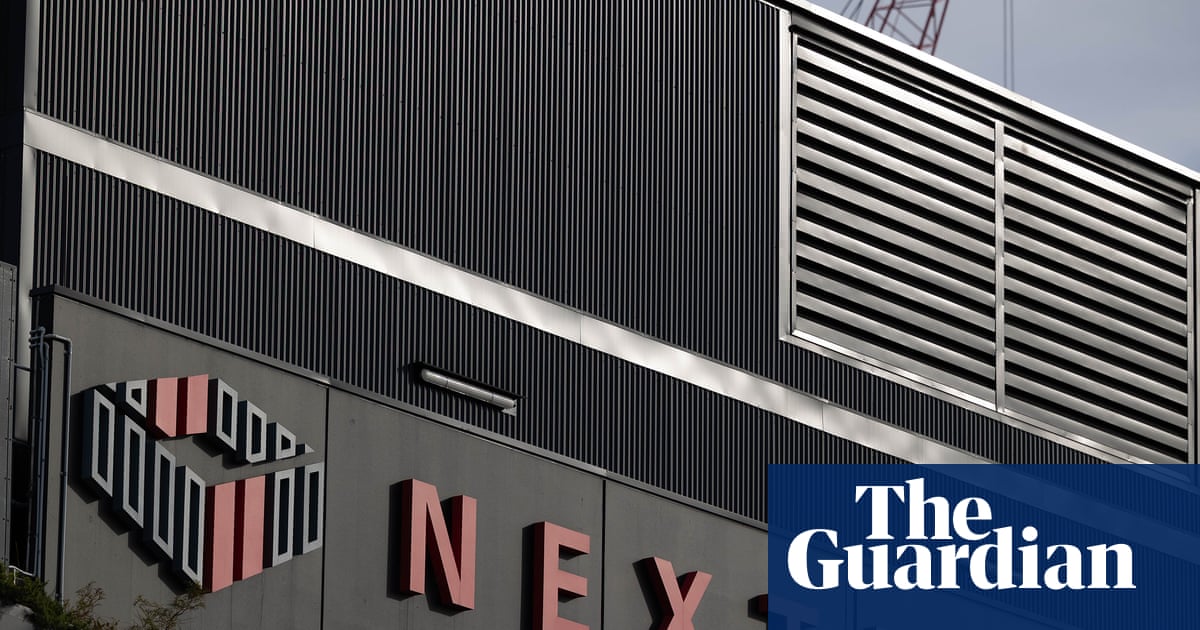
There are nine datacentre projects currently awaiting approval according to the ministerial permits register, including the West Footscray expansion of NextDC’s M3 datacentre, which Guardian Australia reported has faced delays due to community blowback.
Other companies seeking approval for new datacentres include ZerraDC, HyperDC, GreenSquareDC, and Stockland.
The GreenSquareDC proposal for a $1.5bn, 240MW datacentre encompassing more than 105,000 sq metres of Spotswood in Melbourne’s inner west has faced strong opposition from locals similar to that observed in other suburbs around the country.
The proposal was lodged with the minister for planning at the end of July this year, but as with the other projects, it did not get approval before the government went into caretaker mode before the election.
A spokesperson for GreenSquareDC said the proposed development was on a long-vacant site in an established industrial precinct in Spotswood, and the company was proud of its proposal.
“We’ll work constructively with whichever government Victorians elect, and we’ll keep engaging with the Spotswood community throughout the process.”
Locals, however, have mobilised, with a petition with more than 4,400 signatures, and a dedicated website that encourages residents to contact the current planning minister and outlines the various policies on datacentres held by candidates in the Williamstown electorate.
The policies
Last month, after launching the Labor policy in September, the Victorian planning minister, Sonya Kilkenny, released a statement of expectations for applications submitted on or after 23 September.
It includes that datacentres must be built away from homes, schools, and childcare centres, and that they must be designed and located to minimise impact on residential communities.
Developments would be prohibited from residential zones, or within 150m of accommodation, education centres or hospitals, as well as green wedge zones (areas preserved for housing or agriculture), rural zones, or urban growth zones.
Exceptions on the latter are made if it is within 5km of a powerline or substation operating at 66,000 volts, or most of the electricity is supplied from either a renewable energy facility or a battery energy storage system.
Developers will be required to display prominent signage onsite and publish detailed application documentation online.
A spokesperson for the Coalition said datacentres would not be built in residential areas, next to residential areas, or in the green wedge.
“Datacentres will be an important part of Victoria’s future,” the spokesperson said. “They drive investment, create skilled jobs and build the sovereign capability our state needs in a digital economy.”
There would be designated datacentre precincts distanced from where people live, and clear guidelines on where they can and cannot be built, the spokesperson said.
“That means communities can have confidence their neighbourhoods are protected, and investors can have confidence about where to build.”
The Liberal policy does not outline whether the plans apply retrospectively, and makes no statement on power requirements.
The Victorian Greens have a policy of a moratorium on new datacentre developments “until communities have actually had an opportunity to consider the risks and benefits, and create strong laws to protect people and the planet over big tech profit”.
The party’s policy also calls for compensation for affected communities, reverting the fast-track approval process to give communities a greater say, and ensuring datacentres are 100% renewables-powered.
One Nation’s policies call for a ban on new datacentres on agricultural land, as well as a call for full community impact assessments before approval.
The party has also said there will be no retrospective carve-outs, so residents living next to a proposed or expanding datacentre will have the same rights as those living near new developments.
The party has also outlined that datacentres would need to be at an undefined distance from homes.
Developers confident ahead of the election
NextDC chief executive, Craig Scroggie, said in a shareholder update in late October that despite the issues with power supply to the datacentre, he had no reason to believe the expansion would not be approved after the election.
“Even with the revised changes to planning guidelines, they do not apply to existing applications that are already being considered by the planning minister.”
“This caretaker period will ultimately result in a new government being appointed [and a] new minister. We would therefore take the conservative view that given what we understand currently about the government’s approval processes and the upcoming election that the time we would be able to restart that [would be] February or later, depending on the election.”
Sean Brown, a West Footscray resident and Citizens of Tottenham member, told Guardian Australia last month the community would make its voice heard to the incoming planning minister after Saturday.
“We’re not stopping. This is continuing until we get a fair outcome for the residents,” he said.
“It will be a pretty toxic thing to sign off on.”
DoverDC, which is planning a $2.6bn 200MW datacentre next to AusNet’s South Morang terminal station, said its project would be assessed on its merits regardless of the election outcome.
“It is on this basis that it was accepted into the planning process by the current state government and we see no reason why that should change,” a spokesperson said.
Goodman Group, which has lodged plans for three two-storey datacentre buildings in Truganina, west of Melbourne, said it would not speculate on the election outcome or the planning decision but would work constructively with the government and local community.
Материал изданияThe Guardian World
Читать в оригинале