All we could do was drive. Notes on the five years of Sienos Grupė – opinion
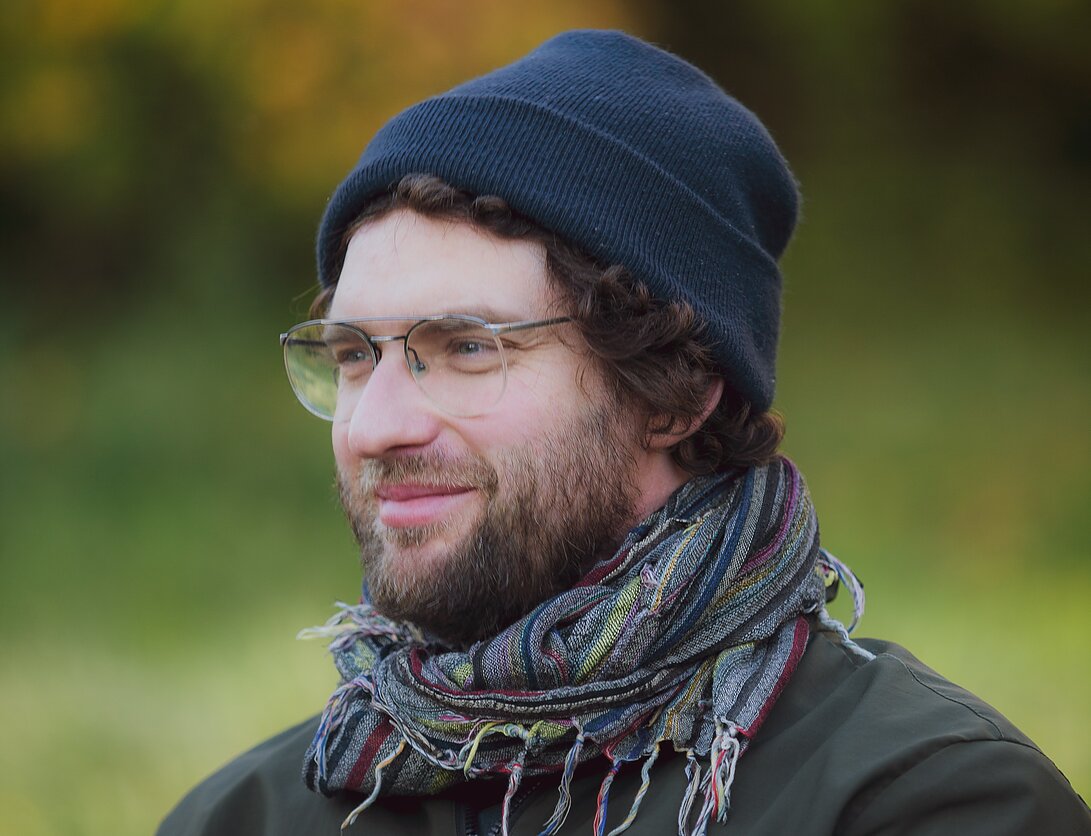
Sienos Grupė – or Border Group – was started by a group of volunteers in 2021, at the start of Lithuania’s so called “migrant crisis”. As people on the move started crossing the border from Belarus, the government threw all resources into erecting walls and pushing them back, leaving none for the people very much in need. Sienos Grupė came to fill in the void. Mantautas Šulskus, one of the founders, takes the toll of the group’s five-year-long efforts.
Vilnius, the capital of Lithuania, was first mentioned in Gediminas’ letters of 1323, inviting people from all walks of life to settle here. Thus, immigration is not new to Lithuania, nor is anti-migrant sentiment. However, the latter has recently been gaining momentum, fuelled by conspiracy theories and hate-speech narratives, copy-pasted from both East and West. As mass “anti-immigration” and opposed to it – anti-racism – demonstrations were brewing in Vilnius in the autumn of 2026, the members of the NGO Sienos Grupė contemplated: in which location and how many litres of coffee to serve for passers-by, to create an informal space to calmly discuss the topic of migration?
This routine was strikingly different from what it had been in the autumn five years earlier, when Sienos Grupė’s dilemmas, while sharing midnight coffees at remote rural gas stations, were: should we try reaching the restricted border area via a main road, possibly encountering checkpoints of Lithuanian border police, or drive via forest off-roads covered in dirt and snow? In both cases we risked not reaching the border area at all, leaving migrants there without essential humanitarian assistance, food, drinkable water, and a change of clothes.
Czesław Miłosz, while accepting the Nobel Prize in Literature in 1980, introduced himself as a man from Lithuania, “a small country where Nature was on a human scale”. Nature of a human scale could hardly kill a person, unless it’s turned into a “weaponized landscape”, a notion I first heard in Copenhagen in the autumn of 2021, when I accidentally walked into a lecture by the American anthropologist Jason De León presenting his new book about the US-Mexican border – The Land of Open Graves.
The lecture connected some dots in my mind between different corners of the world and different centuries. Pushbacks or weaponized landscapes are a reality of every country on the frontier of the so-called West. Lithuania joined the EU in 2004 and the Schengen Area in 2007, yet the reality of being a frontier country of the West hit only in 2021, with the “help” of the dictators of neighbouring countries. Have pushbacks been historically foreign to Lithuania? One could argue that the very first written mention of Lithuania itself, in 1009, involving the denial of entry to and killing of Bruno of Querfurt at the Lithuanian border, an event that turned him into a “Saint”, was a pushback.
One could also think of the group of Polish Jews stranded between Nazi-occupied Poland and still relatively independent Lithuania in the autumn of 1939. Expelled from the Suwałki region by German authorities, they were initially refused entry by Lithuanian border guards. On 5 November, a delegation of Jewish humanitarian organisations and the Lithuanian Red Cross found 31 people, including women and children, stranded in the freezing no-man’s-land. One woman had already died. Through the intervention of humanitarian workers and Jewish community leaders, the refugees were eventually allowed into Lithuania, joining an estimated 15,000 Polish Jewish refugees. This little-known episode is documented by the historian Michal Frankl. Around 2,100 of these refugees would later escape the Holocaust with the help of Dutch and Japanese diplomats, Jan Zwartendijk and Chiune Sugihara.
On the other hand, one could think of the Swedish Baltutlämningen, the extradition of Baltic soldiers by Sweden to the Soviet Union, in most cases straight to the gulag, in 1946. Despite protests from Swedish civil society, hunger strikes and even suicides among the internees, 148 Baltic soldiers were handed over to Stalin, including nine Lithuanians. Almost half a century later, in 1994, the Swedish government acknowledged the injustice and apologised to the surviving victims, who were received by King Carl XVI Gustaf.
My personal step towards joining Sienos Grupė was perhaps in early November 2021, in front of the Lithuanian Government building, holding a self-made poster “Agne, o tu ar ramiai miegi?”, asking then-Minister of the Interior Agnė Bilotaitė whether she could sleep knowing that, on her orders, people, families with kids among them, were being pushed back and forth by the Belarusian and Lithuanian border guards, forced to sleep outdoors in sub-zero temperatures.
During that demo, I might have remembered the first time I had taken part in a demonstration, in my last year of high school. On the eve of a very important national graduation exam, a few questions started to circulate online. One of them was: what literary device is employed in the phrase “the unbearable lightness of being”? The correct answer was oxymoron. The next morning, the same questions turned up in the exam. The Ministry of Education initially stated that all was under control, that the leak, if there even was one, was minor and would not influence the exam results. Soon afterwards, however, the decision was made to cancel the results and we were asked to take the exam again.
That might have been a lesson: if a government, however transparent and democratic, tells us that all is under control, a citizen should be free to double-check it. Or, as Timothy Snyder wrote in his On Tyranny: Twenty Lessons from the Twentieth Century, to get oneself into “corporeal politics”. “Corpo” from “body”. In the autumn of 2021, it seems, some people were not convinced by the government’s assurances that the situation at the border was stabilised, that there was nothing to see there. That “lightness of being” did feel unbearable and asked to be checked with our corporeal presence at the border. A few dozen people were therefore curious to see, and possibly help, to quote the minister Agnė, the so-called “weapons of hybrid warfare” – or, as she was corrected by the CNN host, humans: people on the move stuck at the Lithuanian border.
Contrary to popular beliefs, the founders of Sienos Grupė were not immature youngsters, the initiative was driven by women, mothers, in their 30s and up. Soon, our group became very diverse. Some of us were motivated by abhorrence of violence, belief in international law and human rights; some by their Hippocratic oath; some by the Christian principle of “love thy neighbour”; some came with experience in labour movements or other progressive activism. There were a handful of brave journalists, sensing the danger to free speech if access to the border were completely denied. Almost all of us had some experience of being migrants ourselves – even if rather privileged ones. Some joined the group out of disappointment, as former voters who had voted for the liberals and their platform of human rights, only to see them violated at the border, for foreigners.
The humanitarian help at the border has largely been a cooperative effort of people who are themselves minorities. Like our international volunteers who came to help for longer or shorter periods throughout the first years of Sienos Grupė’s activities: Lutherans from Poland, Mennonites and Frisians from the Netherlands, Vietnamese and Czech Germans, British Bengalis, Portuguese-French people and many more. They were often people who had experience of volunteering and activism at other borders on the frontier of the West.
In the beginning, it seemed, all we could do was drive (to paraphrase the Californian indie-folk band Port O’Brien’s album title All We Could Do Was Sing). Drive to the border, bring backpacks with canned food, negotiate with the border police to hand the things over to the migrants, often fail in the negotiations and look for other ways. We immediately realised that, with our first-hand experience, we were the only voice from the border, apart from that of the border police. In a democracy, you need at least two voices. All of a sudden, our voice mattered – for parliamentary committees, for national and foreign media, for international and local NGOs.
Very soon, around Christmas 2021, we had a criminal investigation opened against us. A few of us had to go for questioning by the police; eventually, the case was dropped as groundless. Simultaneously, we ourselves started taking legal action, be it at the European Court of Human Rights to ask for interim protective measures for migrating people, or at Lithuanian courts to address the misconduct of state institutions, thus entering the field of strategic litigation. Slowly, Sienos Grupė shifted from being a villain, suspected of being criminal, to a state-accepted vigilante, part of a healthy democracy.
Besides criminalisation, there might have been other, more nuanced consequences, such as marginalisation and cancellation. Even when something is perfectly legal, as American political scientist Norman Finkelstein points out in his writing on cancel culture, society establishes boundaries of what’s acceptable. If “one finds, or places, oneself on the wrong side of them, one gets cancelled”.
Lithuanian society has largely been supportive of the pushbacks, which means that those of us who oppose them risk finding ourselves on the wrong side of these boundaries. But cancelling someone in Lithuania, like much else in everyday life, is done rather silently. You wouldn’t know people shut you off if you didn’t know there was a possible opening to begin with. Everyday interactions make you wonder: have I been cancelled? Or are they just being their normal reserved selves?
I remember us giving a video interview in the autumn of 2021 to some Belgium-based Kurdish online channel, with our faces half-covered (Covid regulations, we argued) and using noms de guerre instead of our real names (that interview was never screened, sadly). Since then, Sienos Grupė has been interviewed by media foreign and domestic, from Voice of America, BBC or Le Monde, to Radio Vilnius, NARA, Start FM or Radio Mary.
Sienos Grupė has survived these five years with a lot of black humour and self-irony. We went to people in life-and-death situations. We earned a place at some tables and on some panels where decisions were discussed. Court rulings, scholarly work and even books about the topic have been piling up. The interior minister whose insomnia I was curious about in 2021, is no longer minister and has left politics altogether.
Policies at the Lithuanian border remain hardline, no matter who is in government. The pushbacks continue. Deaths too. After the initial drop following the building of the fence and the introduction of surveillance – the weaponisation of the landscape – 2025 saw more pushbacks than 2024, and 2026 has already surpassed 2025. The ability of people on the move to contact Sienos Grupė and get sufficient humanitarian and legal aid has, however, declined.
Our hotline is still active, and we have been on standby, 24/7, all the way since the autumn of 2021.
Материал изданияLRT English
Читать в оригинале