Lithuanian officials deny country’s involvement in alleged Kaliningrad attacks
Lithuania has never allowed its airspace to be used for attacks against Russian targets, Foreign Minister Kestutis Budrys said on Saturday, dismissing Russian claims that a drone had flown into the Kaliningrad region from Lithuanian territory as disinformation.
"The Lithuanian Foreign Ministry categorically rejects the false claims circulating on social media about Lithuania's alleged involvement in a drone attack on Russia's Kaliningrad region," Budrys wrote on social media platform X.
The authorities “had information” that Russia could use the incident to stage attacks against Lithuania, Budrys said in a later statement issued to the media, adding that the country did not have precise information about what happened in Kaliningrad.
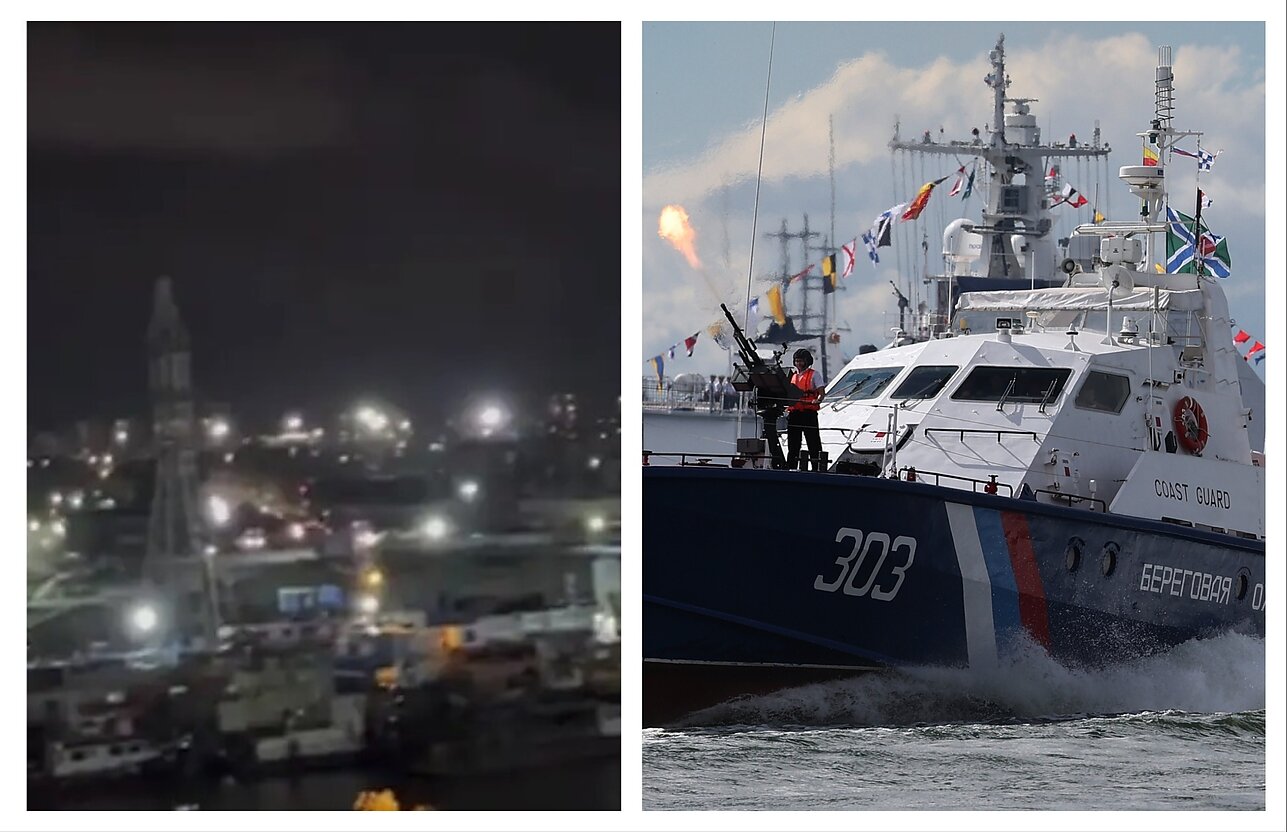
Media reports said that military facilities in Russia’s Kaliningrad region may have been attacked on Saturday evening for the first time since the start of Russia’s full-scale invasion of Ukraine.
A warning about a drone threat was issued in the region, with Russian authorities temporarily restricting operations at Khrabrovo Airport.
Kaliningrad Region Governor Alexei Besprozvannykh said the warning system was activated after a suspicious object was detected coming from the direction of Lithuania.
On Sunday, reports circulating on social media about the drone attack remained disputed, and it was still unclear what had actually happened in the Kaliningrad region, despite widely shared videos of gunfire amid blaring air raid sirens.
The footage was not independently verified.
The National Crisis Management Centre (NKVC) also said the Lithuanian Air Force had not detected any drones.
"We want to state clearly that the Lithuanian Air Force did not detect any drones. Lithuania has not allowed and does not allow its airspace to be used for attacks," the NKVC said.
Russian information channels have previously spread claims that NATO seeks to isolate Kaliningrad and disrupt its supplies, the centre said.
It added that the latest reports could be an attempt to create the false impression that Lithuania or NATO was involved in attacks on Russian facilities.
Defence minister: ‘A psychological operation’
Lithuanian Defence Minister Robertas Kaunas said it had been confirmed that air-raid sirens had sounded in the region and that Russia had fired at something.
However, Lithuanian radars had not detected any drones, and Russia had not officially accused Lithuania of being the source of the alleged drones.
“Initially, the governor simply mentioned that [a drone may have flown in] from the direction of Lithuania, but it did not come from Lithuania. Various staged scenes, reactions and fake photos then appeared on social media,” the minister told LRT RADIO on Monday.
Kaunas said claims of Lithuania’s involvement in the alleged attack were meant to provoke a reaction in Vilnius.
“In my view, this was an attempt to carry out a psychological operation against Lithuania, with the aim of intimidating the public and triggering a wave of disinformation,” Kaunas said.
“They were simply trying to provoke a reaction from Lithuanian politicians and leaders to events that probably did not even happen,” he said.
According to him, a disinformation campaign against Lithuania had been conducted on social media.
“The aim was to provoke a reaction from us, which could then be surrounded by various rumours and used to develop a disinformation campaign.
“I am glad they failed to provoke such a reaction and that our National Crisis Management Centre, along with other institutions, immediately dismissed all the claims linking Lithuania to the incident,” he said.
Lithuanian president: ‘a bubble’
President Gitanas Nausėda called reports of an alleged attack in Kaliningrad a bubble, adding that the Kremlin's silence proved nothing had actually happened.
"It is probably telling that the official Kremlin, which would normally seize any opportunity to escalate tensions or generate waves of propaganda, has made no official reaction this time," Nausėda told reporters on Monday.
According to Nausėda, the reports of an attack were an unfounded bubble that was later played down.
The president said Lithuania must be prepared for potential future propaganda campaigns or other attacks, but reiterated that its territory would not be used to launch attacks against neighbouring states.

LRT EnglishNewsletter Every Friday morning.
Материал изданияLRT English
Читать в оригинале